
Damp Proofing
One of the most common issues with properties throughout the UK is Dampness. Regardless of the type, age, shape or size of the property, nearly all buildings suffer from some form of dampness during their lifespan. Yet, many of these issues are easily prevented with proper damp proofing. If you would like to hear more about the damp-related services we offer, call us today on 01252 333 310 or fill out our simple contact form.
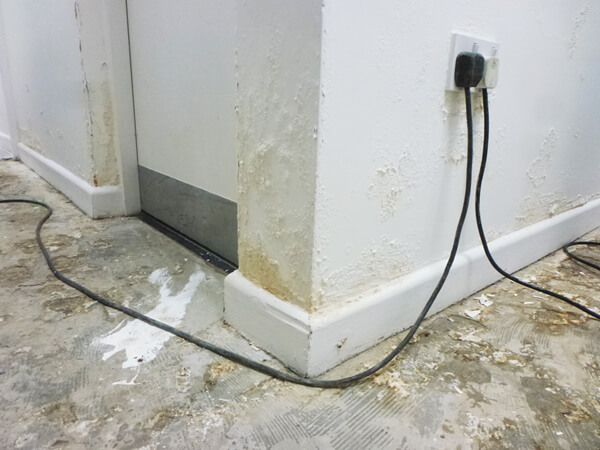 The Problem
Dampness in structures can manifest its self in a number of ways. The 3 most commonly encountered are often as a result of:
- Rising Dampness (Capillary moisture)
- Lateral moisture penetration (External wetting)
- Condensation (Internal atmospheric moisture)
‘Rising Dampness’
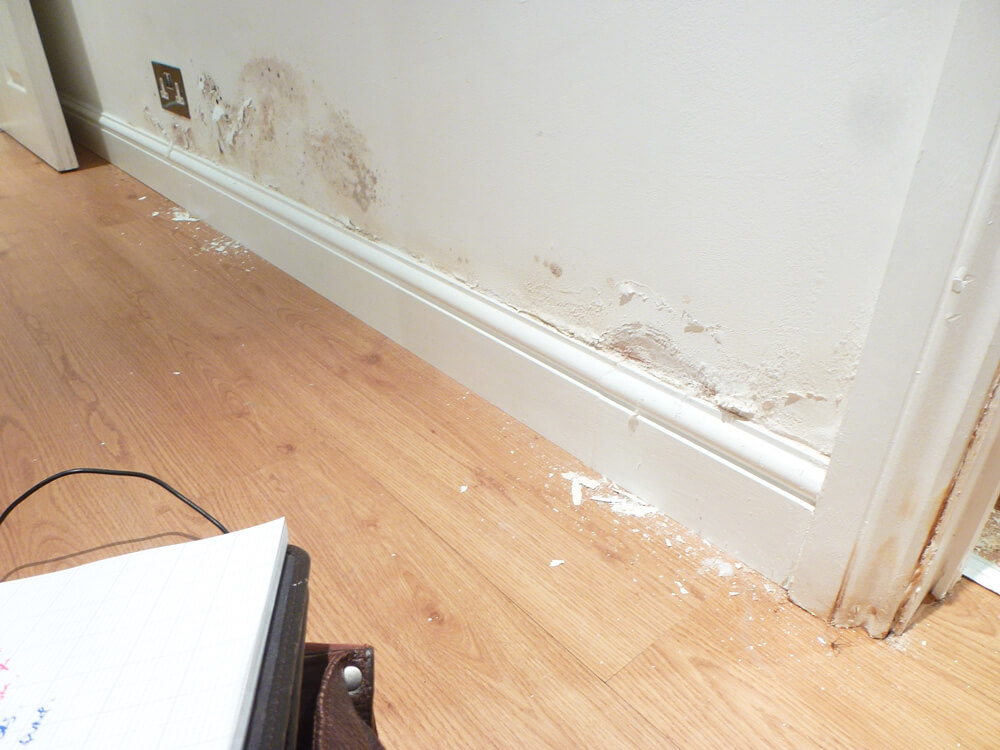 ‘Rising damp’ is caused when ground water from damp soil or earth is drawn up through the base of a structural wall via means of capillary action – i.e. water being drawn up through the fine pores of the masonry where no effective damp proof course [DPC] or damp proof plaster or membrane system is in place. The exact same process as if the end of a shoelace was dipped in a puddle. over time, the fabric will absorb liquid and moisture would be drawn up like a wick.
Generally, rising damp manifests itself as moisture staining and spoiling of plasters above the skirting line, often containing mineral salt deposits, affecting only the lower 50cm to 100cm of the wall surface.
This said, the height to which the damp will rise can significantly increase dependant on, amongst other factors, the rate of evaporation. Where evaporation is restricted by dense external renders and/or impervious coatings or similar, then the rate of evaporation is reduced and the moisture can reach higher levels within the wall.
As rising dampness can be both unsightly and cause further internal issues such as decay of perishable items including timbers and plaster, ensuring a solution to provide you effective damp proof protection is essential to the maintenance and good upkeep of your property.
Lateral moisture penetration
Later moisture penetration describes the process of direct wetting of the structure, usually as a consequence of external defects, leaking rainwater pipes/gutters, high ground levels against the building and/or structural abutments such as garden walls etc that may encourage dampness to be forced into an external or perimeter wall.
Usually a localised problem, our surveyors are trained to identify obvious external issues that may lead to water penetration, unsightly spoiling of decorations moisture staining and/or more potentially serious issues that may arise as a consequence of excessive water ingress.
Our trained surveyors can carefully diagnose an issue and advise on methods of rectification, specialist drying out procedures and the reinstatement of suitable internal linings or protection to provide you with internal protection during the drying out phase.
Condensation
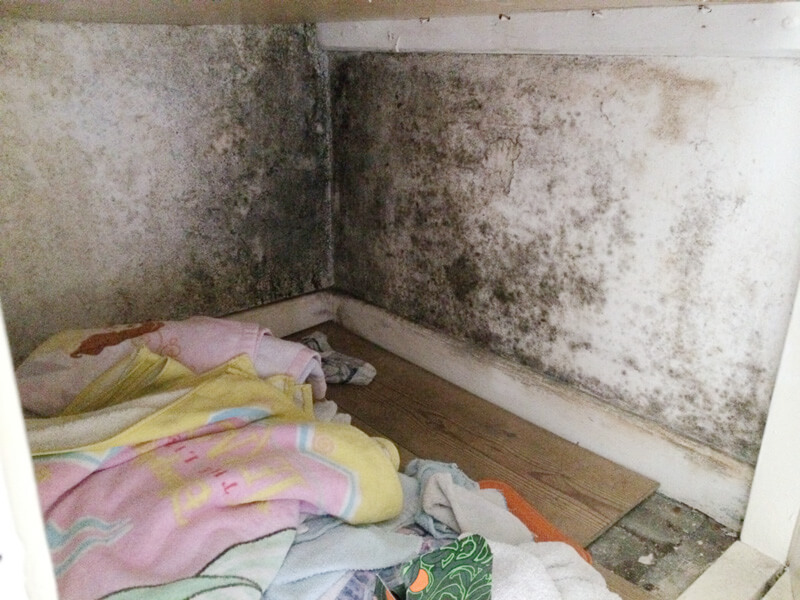
Condensation is an incredibly common and increasing problem throughout the UK.
Condensation is a naturally occurring event and centres around the fine balance between the amount of moisture vapour held within the air at any given time and the surface temperature or surrounding surfaces and structures. As we are now using building differently than ever before, condensation and its effects are a growing issue, which is why sound damp proofing is essential.
The inside of each and every individual property effectively has its own micro climate. When moisture laden air, primarily created by the occupiers’ lifestyle (from bathing, cooking, the internal drying of clothes and even breathing!) is trapped within the internal space and cannot escape via sufficient ventilation, the normal atmospheric balance is tipped and the risk of condensation is greatly increased. Should this excess moisture vapour come into contact with a cold enough surface, it will re-condense and form back into liquid water.
This is most readily detectable on windows or other impervious surfaces as ‘steamy windows’ or water droplets and in severe cases, a stream of water running down the surface may even be visible. Should surface moisture be a reoccurring issue, then the onset of ‘black spot’ surface mould growth (most commonly Aspergillus sp) often becomes evident to varying degrees of severity and visual ‘dampness’ becomes a problem.
Unfortunately, in some instances condensation can cause effects and damage to a greater degree than what may be visible. In addition to obvious surface moisture droplets and mould, condensation can also occur undetected in such places as sub-floor voids at ground level and roof spaces where it can cause the wetting of timbers, the onset of decay and even potentially significant structural damage.
As each situation condensation occurs can vary and even be completely different at differing times of the day, finding a solution can range from making some minor adjustments to the habits of occupants through to carefully considered steps to prevent further issues and managing of the internal environment. Our surveyors will give you an honest appraisal and suitable advice where required to help rectify or improve the issue.
Our damp proofing solutions
 When dealing with all aspects of dampness, be it rising damp, lateral moisture penetration or condensation – Our PCA qualified damp proofing surveyors are trained to carefully evaluate the source and pattern of any moisture presence using both their experience and the aid of specialist damp meters or more dedicated analysing equipment where required. As a reliable and experienced specialist, you can be assured that we will correctly identify the cause of the problem and will only specify the correct and most cost effective remedial damp proofing measures to provide ongoing protection of the area.
We can conduct all manner of remedial treatments to combat all forms of dampness, including:
- The insertion of a remedially installed chemical damp proof course injection using silicone creams, all tested and certified by the British Board of Agreement.
- The installation of specialist membrane or internal plaster/render systems.
- The lowering of external ground levels and installation of surface water drainage systems.
- The installation of a full range of alternative methods including injection mortars, electro osmotic systems and the insertion of physical damp proof courses.
- Along with the adaption of structures and external membrane installation to prevent moisture ingress.
- Offer advice regarding condensation control such as correct insulation, good air flow, dehumidification and anti-mould products.
If you would like to discuss any of these measures, or any damp proofing services you may require, then please get in contact with us today and we will be happy to help.
We don’t just deal with damp problems and waterproofing but also provide assistance in timber preservation, especially in cases concerning woodworm and fungal decay. Should you have timber preservation concerns or have areas where dampness has lead to some decay or rot, please visit our timber page by clicking here for more information.